
Dislodged Teeth
Sometimes a tooth may be pushed partially out of the socket. Again, your endodontist or general dentist may reposition and stabilize your tooth. If the pulp remains healthy, then no other treatment is necessary. Yet, if the pulp becomes damaged or infected, root canal treatment will be required. If left untreated, many different complications can arise. These complications can include but are not limited to: Infection of the tooth, root system or surrounding tissue, inadequate hygiene due to an inability to properly clean the dislodged tooth and the gums, and loss of the tooth.
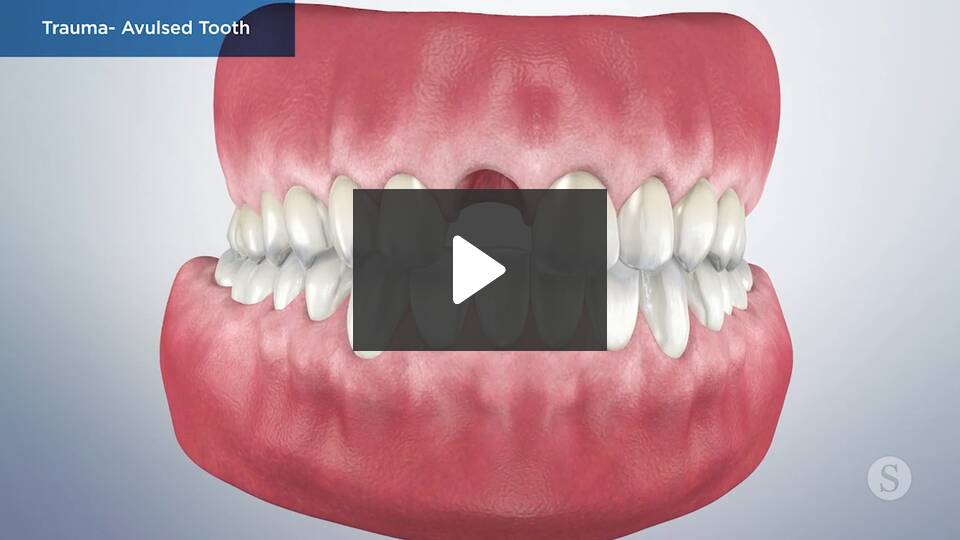
Avulsed Teeth
Tooth Injuries in Children
Apexogenesis
This procedure encourages the root to continue development as the pulp is healed. Soft tissue is covered with medication to encourage growth. The tip of the root (apex) will continue to close as the child gets older. In turn, the walls of the root canal will thicken. If the pulp heals, no additional treatment will be necessary. The more mature the root becomes, the better the chance to save the tooth.
Apexification
In this case, the unhealthy pulp is removed. The doctors place medication into the root to help a hard tissue form near the root tip. This hardened tissue provides a barrier for the root canal filling. At this point, the root canal walls will not continue to develop, making the tooth susceptible to fractures. So it is important to have the tooth properly restored by your dentist.